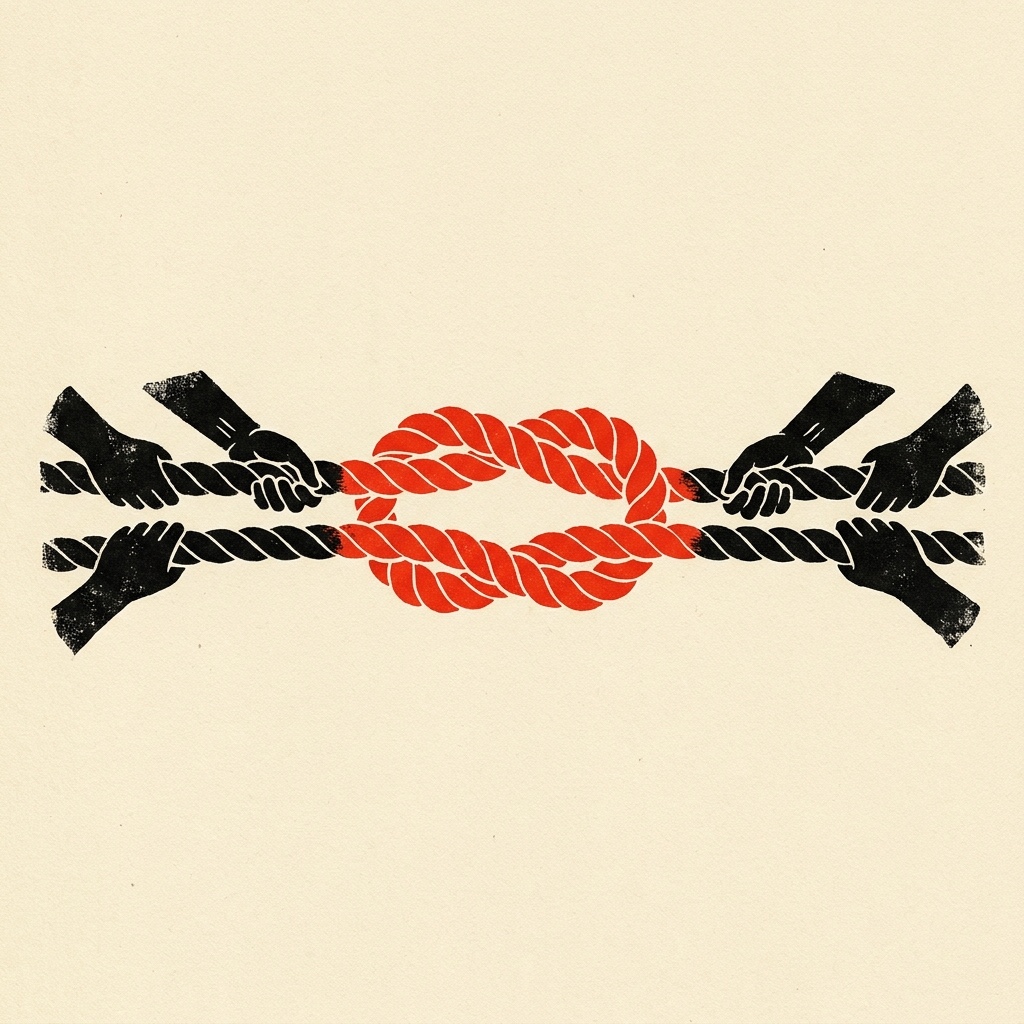
- What happened: Anthropic was two days from pulling Claude Fable 5 out of subscription plans. After Moonshot AI's Kimi K3, an open-weights model out of China, landed and started trading blows with US frontier models, Anthropic reversed: Fable 5 stays in Max and Team Premium, and Pro and Team Standard users get a one-time $100 credit.
- Why it matters: a credible competitor forced access up and price pressure down. A multi-model market keeps frontier AI a tool a normal business can afford. That is the market doing its job.
- The catch: Kimi K3 is built and hosted by a company under Chinese jurisdiction. Open weights help you only if you self-host. Do not feed its hosted service anything sensitive.
Anthropic was two days from pulling its best model
For about 48 hours, the story was that Claude Fable 5 was too expensive to keep around. Anthropic had rolled it out in stages, throttling access and citing capacity, "demand has been challenging to predict." The direction looked set: gate the best model behind the top tier and meter everyone else.
Then Kimi K3 dropped. Moonshot AI's new model came out of China trading blows with every US frontier model, and it shipped with open weights, meaning anyone can download and run it. Within two days Anthropic reversed: Fable 5 stays in Max and Team Premium at half the usual limits, Pro and Team Standard keep access through usage credits, and everyone in those tiers gets a one-time $100 credit.
The three-way squeeze
That is the entire AI race compressed into one week. Anthropic is being pulled three ways at once: monetize the lead it has, stay ahead of OpenAI and Sam Altman, and now answer a Chinese lab that just erased the assumption that the frontier is American-only. When a company is stretched like that, the customer usually wins the round. You just watched a price-and-access decision reverse in your favor because someone else shipped.
Anthropic's own phrase, "as we secured additional capacity," is the quiet part said out loud. Everyone is compute-constrained right now, and the fight for GPUs is as real as the fight for benchmarks.
Everyone is straining, including the challenger
The scramble is not one-sided. Ask Kimi K3 to do real work at the wrong moment and you get this:
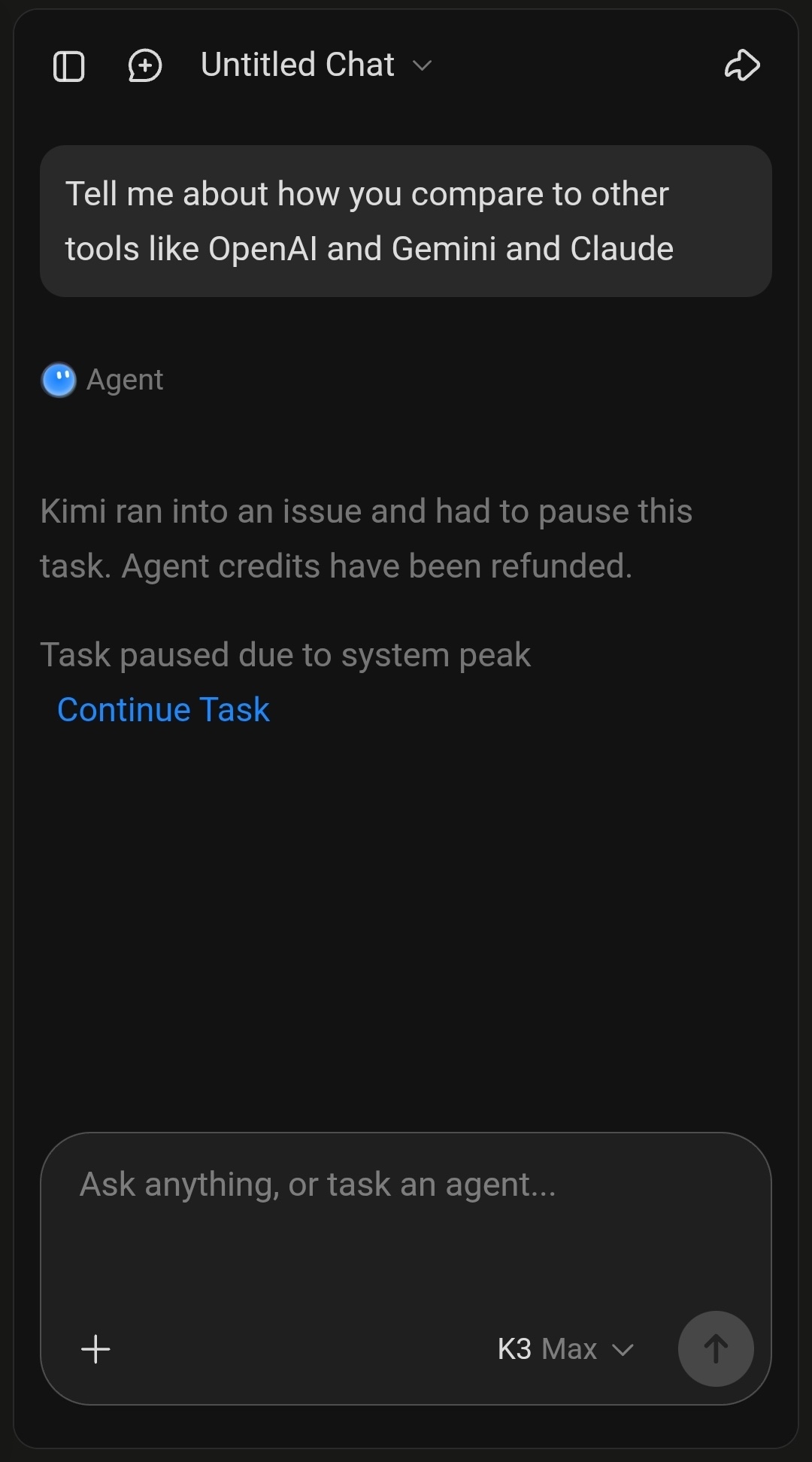
"Task paused due to system peak." The model that supposedly erased the US lead is refunding credits because it cannot keep up with its own launch-week attention. Anthropic is rationing capacity; Moonshot is dropping tasks. That is what a genuine demand shock looks like on both sides of the Pacific, and it is a reminder that the winner of this race is whoever can actually keep the lights on at scale.
What Kimi K3 actually is
Strip away the hype and K3 is a specific bet: that frontier coding capability, open weights, and competitive total task economics can challenge the premium pricing power of US AI companies. It does not beat Claude or Gemini across the board. It narrows the gap sharply in the areas that drive enterprise value, while offering something neither closed competitor does, the ability to own, modify, and deploy the model yourself.
Asked to compare itself, K3 produced the table below. Read it as the model's own self-report, not an independent benchmark:
| Dimension | Kimi K3 | Claude Fable 5 | Gemini (latest) |
|---|---|---|---|
| Raw scale | 2.8T params (largest open) | Unknown (proprietary) | Unknown (proprietary) |
| Coding | Best-in-class | Strong | Good |
| General reasoning | Frontier-level | Slightly ahead | Competitive |
| User experience | Good, with quirks | Best-in-class | Good |
| Safety / guardrails | Developing | Mature | Mature |
| Cost efficiency | Competitive per-task | Higher per-task | Mid-range |
| Openness | Fully open-source (July 27) | Closed | Closed |
Source: Kimi K3's own self-comparison. Treat as a vendor self-assessment, not independent benchmarking.
Look at the "Safety / guardrails" row. K3 rates its own guardrails as developing while marking the US models mature. That candor is useful, and it points straight at the catch.
Why you should want this
A single dominant lab prices like a monopoly. Four labs racing keep frontier AI a tool a normal business can actually afford, and they keep each other in check on both capability and price. The Fable 5 reversal is that mechanism working in real time. It is, genuinely, a good time to be building on this stuff, the tooling keeps getting better and the floor keeps getting cheaper.
The catch: where your data goes
Kimi K3 being open and competitive does not make it safe to use for everything. It is built and hosted by a company operating under Chinese jurisdiction. If you use its hosted API or app, your prompts, and whatever you paste into them, leave your control and land with a company subject to Chinese data law. Open weights help you here only if you self-host them on infrastructure you control. Using the vendor's cloud is the opposite of that.
Use whatever model wins on merit for ordinary work. Draw a hard line for anything sensitive: customer data, credentials, source code, regulated records, legal or health information. Those do not go into Kimi K3's hosted service, or any foreign-hosted model, without a deliberate decision and controls behind it. The cheapest model in the world is expensive if it is a data-exfiltration path.
Competition just made frontier AI better and cheaper. It is your job to make sure it does not also make your data someone else's.
Sources
Anthropic (@claudeai), Claude Fable 5 availability announcement, July 18, 2026. Kimi K3 scale, openness, and the self-comparison table via Moonshot AI and the model's own output. The competitive framing reflects public reporting; Anthropic did not name Kimi K3 as the reason for the change.
See the AI Observatory
Caver records your AI agents as security telemetry, flags prompt injection and data leaks in real time, and keeps the sensitive content out of the lake. Live today.
See the AI Observatory at getcaver.com